
B2B copy: written for business, read by people
B2B industries have changed radically in the past decade. With the explosion in B2B commerce, the rapidly expanding Martech Map, and the rise and rise of LinkedIn, B2Bs are now scrapping for customers’ limited attention – much the same as consumer brands.
Get noticed. Be different. Find the human. Resonate. Mean more than the next quarter’s KPI.
Here’s some of our best work….
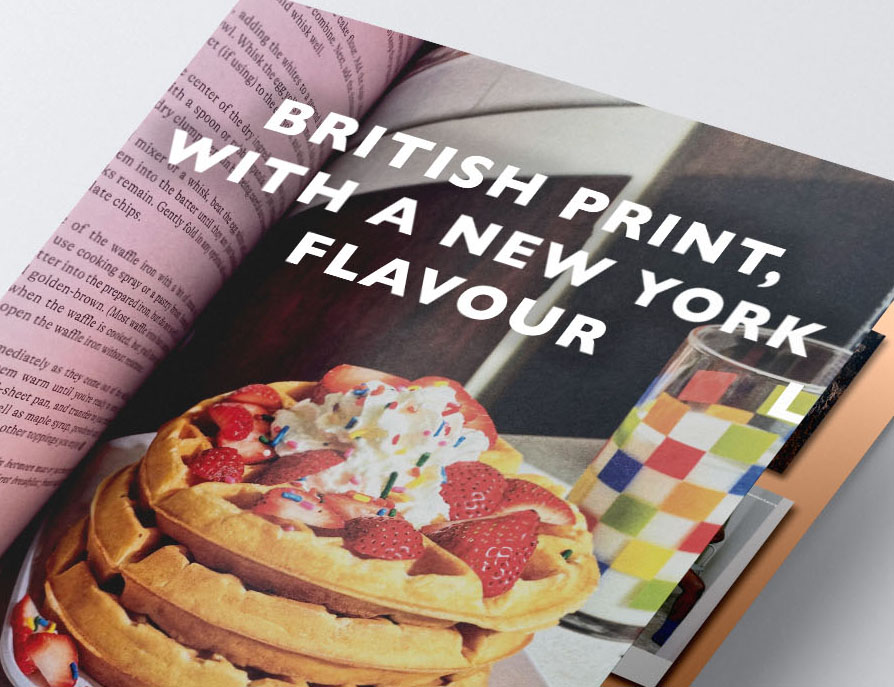
British Print, with a New York Flavour.
This piece for our longstanding client Park Communications Ltd. was produced for a US event, showcasing the UK printer’s proposition to US publishers. Playing off the client’s photography, the nod to NYC’s foodie culture created emotional engagement for local audiences. QR code scan data showed people were still reading the leaflets 3 months later.
For a UK printer’s proposition to US publishers
Conveying OLIVER’s ‘in-house’ proposition, which situates creative teams in clients’ offices.

Can your agency do this?
This LinkedIn ad promoted a whitepaper reporting on the rise of the ‘in-house agency’, a business model where an agency’s full-time creatives work in a client’s office, alongside their marketing team. OLIVER pioneered of this model; competitors duly followed. This ad was one part of a 15-month campaign to truly take ownership of their innovation.
The slightly-less-cool older brother.
This client was hosting ‘people from Shoreditch with beards’ for sales meetings – in a boardroom with an oil painting of their founder on the wall. They wanted to show off their experience, but meet the client at eye-level. We positioned OpalIS as their clients’ ‘slightly-less-cool older brother’, and delivered stash of creativity for this venerable businesses’ modern piece of tech.
Branding piece for an insuretech vendor.

Bring out the human in your B2B.
Of the dozens of writers we interview each year, here at Navigate B2B, we hire just a handful.
What do we hire for? Business acumen, yes. Category specialism – obviously; writers are handpicked for your solution and your customer’s problem.
But above all: talent. We can teach anyone to write, but that final 10% of quality separates ‘good’ from ‘great’ also separates businesses from their customers.
Let’s grab a coffee and see how we can help.
Case studies
-
SaaS Insuretech

BRAND GUIDELINES & KEY MESSAGING PACK
Navigate B2B was engaged by Synergy Financial Products Ltd. (SFPL), a well-established fintech firm. SFPL already sells effectively to big banks, but was finding its “big business” personality less effective in an emerging market of trendy, consumer-facing fintech startups.
-
Print Manufacturer

PRINTING FIRM: FULL-SERVICE DIGITAL MARKETING
Park approached Navigate B2B in 2019 in search of a new buiness marketing function. The company was a leading supplier in the market, but a new approach was needed in order to add new leads to the top of the funnel and accellerate the pipeline.
-
Creative Agency

MARKETING A DIFFERENT AGENCY MODEL
Most agencies target marketing managers in order to stay in the running for RFIs. OLIVER is different. They install and operate full-service, on-site agencies.
-
L&D consultancy

BOOK EDITING FOR L&D CONSULTANCY
Align Learn Do is a learning & development consultancy for SME to enterprise, and also an established publisher of thought leadership for L&D teams.
Thought leadership…
-

Intelligent marketing reporting for business growth
Marketing reporting should indicate whether your efforts are contributing to growth. This starts with having control of the data.
-

How a balanced B2B commercial strategy de-risks your growth
Pursuing different sales & marketing tactics in parallel helps companies adapt to market conditions, learn, and optimize their growth strategies.
-

Composable architecture unlocks the direct-to-consumer model
DTC is a notoriously difficult business model. Composable architecture improves brands' control of data, maximising their chances of success.
-

Major marketing trends hinge on composable architecture
For the major marketing trends to be fulfilled, brands will first need to modernise their tech stacks in order to make better use of data.
-

Communicating sustainability with data visualisation
Data can help consumers understand why their personal actions are important, and to believe that they can help.


